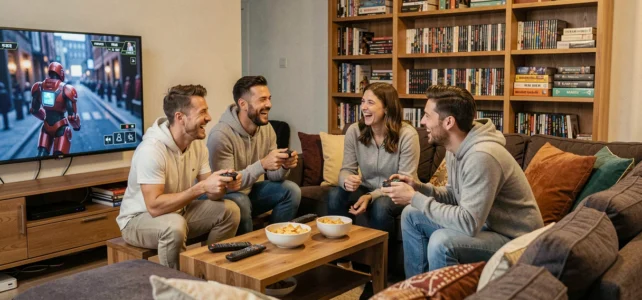
A leisure space brings together a variety of activities under one roof, such as bowling, laser tag, play areas, and creative workshops. The promise is simple: to centralize entertainment for all ages. The reality of the experience depends on less visible factors, from the regulatory framework for accessibility to the composition of the audience that actually frequents these places.
Accessibility register in a leisure space: what the law requires
Leisure complexes are public establishments (ERP). Since September 30, 2017, each ERP must maintain a public accessibility register, available at the reception in paper or digital format. This register specifies the accessible services and the level of accessibility of the venue.
Most competing sites mention activities “suitable for everyone” without reference to this verification tool. Before choosing a leisure space for a person with reduced mobility or a disabled relative, asking to consult this register allows one to distinguish a genuine inclusion effort from a mere commercial argument.
Among the platforms that document entertainment offerings, Séries Conseil’s leisure space gathers various activities and facilitates searching by type of outing.
The decree of May 16, 2025, also introduced a requirement for displaying information dedicated to reporting violence and abuse in ERPs. Specifically, a leisure space must now display the contact details of reporting mechanisms in a location visible to the public. This aspect is still not widely communicated by the operators themselves.
Who really frequents leisure and entertainment spaces
The 2025 Cultural Outings Barometer from the Ministry of Culture shows that 15-24 year-olds frequent leisure facilities more than older age groups. Educational level also plays a role: executives and highly educated individuals show the most developed outing practices.
This observation calls into question the image of “leisure for all” often promoted. A space that only offers go-karting, trampolining, and virtual reality video games targets a young, urban audience. Families with young children or seniors do not always find what they need there.
Adapting the offering to underrepresented audiences
Some complexes have begun to schedule specific time slots: quiet mornings for families with young children, low-light sessions for autistic individuals, manual workshops for a senior audience. These initiatives remain in the minority. Feedback on their profitability varies, but they build loyalty among an audience that was not accustomed to visiting such places.
Immersive activities and indoor games: concrete selection criteria
With the proliferation of leisure spaces, the choice can seem confusing. A few criteria can effectively sort the offerings before visiting.
- Variety of activities by age group: a good space offers at least three types of activities suitable for children under six, teenagers, and adults, without each being sent to a separate corner
- Presence of an accessible register that can be consulted and explicit mention of facilities for people with reduced mobility
- Clear pricing policy: family passes, group rates, unlimited options. Complexes that do not display their prices online often hide additional fees at the entrance
- Noise level and flow management: a poorly soundproofed space where bowling is next to the play area without separation makes the experience unpleasant for everyone
A space that checks these boxes offers a significantly better experience than a place that relies solely on the novelty of its attractions.
Leisure space in the city: the question of format and visit duration
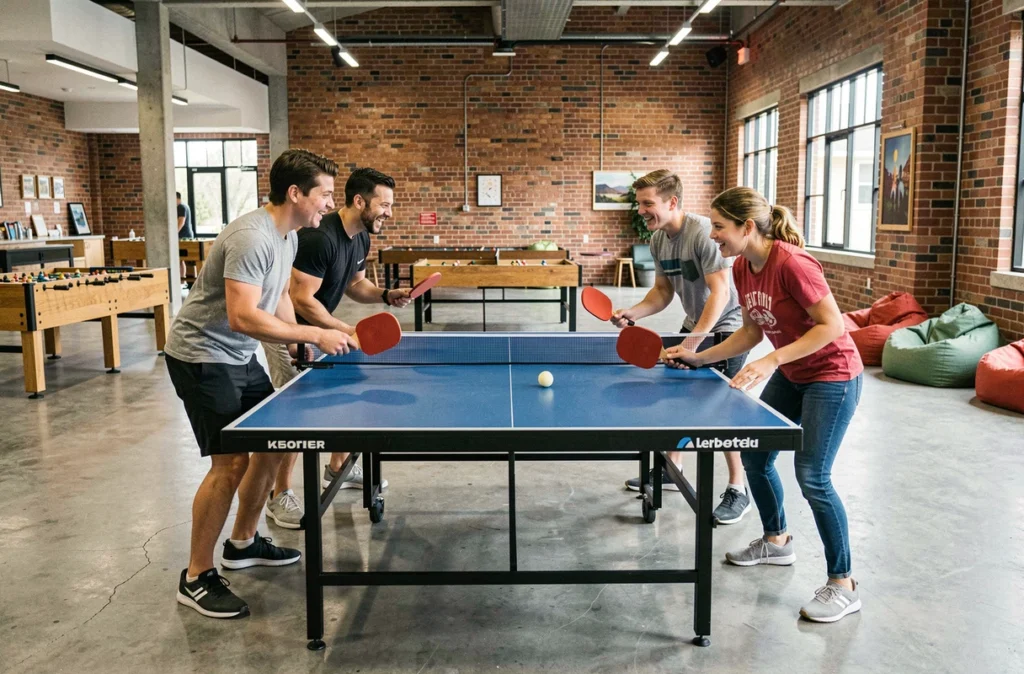
Indoor leisure complexes have multiplied in suburban commercial areas. In city centers, the format differs: smaller spaces, more targeted activities (escape rooms, creative workshops, board game cafes). The format determines the duration of the visit and the type of entertainment possible.
A suburban complex allows for a complete half-day of activities. A city center venue is more suited for an outing of one to two hours, often in the evening. The two formats do not meet the same expectations.
Immersive experiences: an expanding segment
Activities deemed immersive (virtual reality, scripted escape rooms, interactive courses) attract an adult audience willing to pay more per session. Their commercial lifespan raises questions: an escape room scenario can only be done once, which forces operators to regularly renew their offerings to maintain attendance.
The available data does not allow for conclusions about the sustainability of this model, but the trend pushes leisure spaces to combine renewable attractions (bowling, trampolining) with ephemeral experiences of high added value.
Practical tips for choosing a leisure space suitable for your family
Before booking, a few simple checks can avoid disappointments:
- Check recent reviews (less than three months old) to spot any maintenance or cleanliness issues
- Verify if the venue offers off-peak slots, often cheaper and more pleasant for families with children
- Request the accessibility register if a group member has specific needs, rather than relying on generic mentions on the website
The 2025 Cultural Outings Barometer notes a slight decline in attendance at leisure facilities compared to 2024. This decrease prompts some operators to reconsider their pricing or offer more attractive bundled deals. Taking advantage of this period to test new spaces can prove beneficial.
A well-designed leisure space remains a place of entertainment accessible to multiple generations, provided that it is verified in advance that it lives up to its promises of welcome as well as its promises of fun.