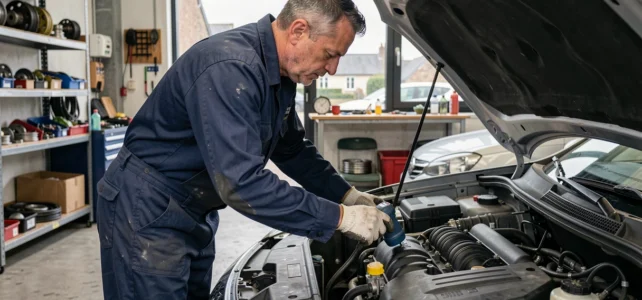
Engine optimization refers to all modifications made to a vehicle’s electronic management system to improve its torque, power, or fuel consumption. In Normandy, several workshops offer these services, from remapping to power bench testing, including E85 bioethanol conversion. Knowing how to distinguish between the types of services and the reliability criteria of a workshop allows for a choice that is suitable for one’s vehicle and actual usage.
Power Bench and Custom Mapping: What Separates a Reliable Service from a Generic Tuning
Most workshops in Normandy advertise “engine reprogramming,” but the quality of the work largely depends on the available equipment. A four-wheel drive power bench allows for real-time measurement of power and torque before and after modification. Without this tool, the tuning relies on pre-established maps applied without verification.
A custom map adjusts injection parameters, turbo pressure, and ignition timing based on the actual behavior of the engine on the bench. Workshops that develop their own maps (and not files purchased from third-party suppliers) generally provide a result that is more suited to the vehicle.
For those looking to optimize their vehicle in Normandy, the presence of a power bench and the ability to provide before/after readings are the first indicators of seriousness.
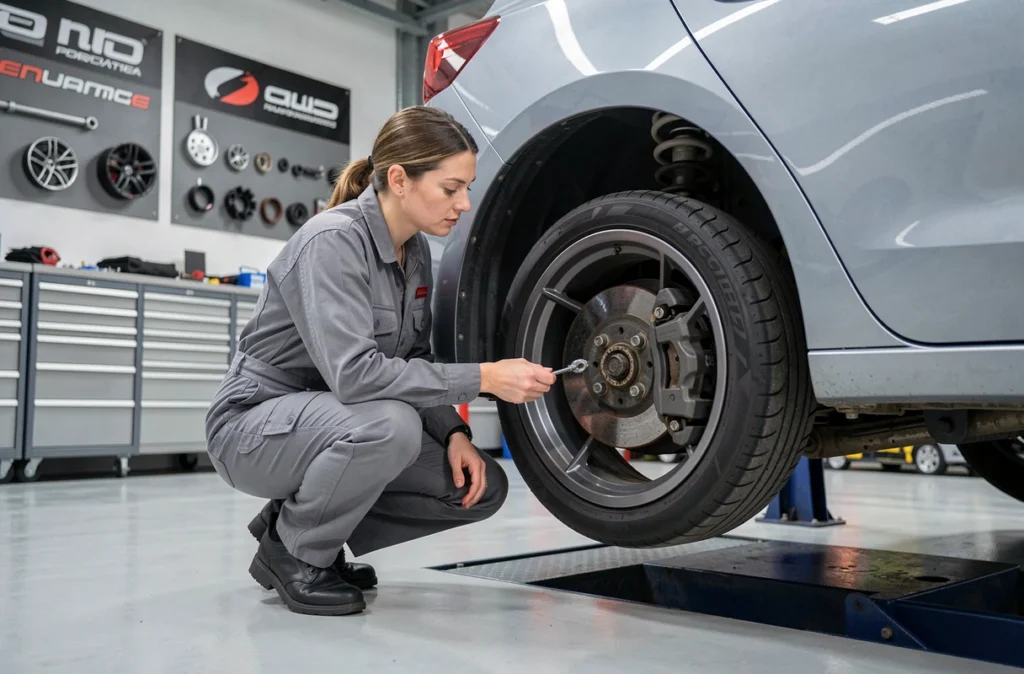
E85 Conversion in Normandy: Reprogramming or Approved Box
The conversion to E85 bioethanol represents a growing share of requests. Two approaches coexist: the installation of an approved box and direct reprogramming of the engine control unit. From a regulatory standpoint, these two solutions are not interchangeable.
An approved box is subject to certification by a referenced manufacturer. After its installation, the registration certificate must be modified to reflect the new fuel type in section P.3. The DREAL specifies that no additional DREAL approval is necessary for this specific operation.
In contrast, E85 reprogramming directly modifies the mapping of the control unit. It often offers a finer result in terms of performance, but it does not benefit from the same approval framework. Before signing with a preparer, the question to ask remains simple: what documents does the workshop provide at the end of the intervention, and what accompanies the registration process?
What the Workshop Must Provide After a Conversion
- The compliance certificate of the box (if an approved box), necessary for the modification of the registration certificate
- The power bench readings before and after the intervention, which serve as technical proof of the tuning
- A detailed invoice mentioning the exact type of service performed (reprogramming or box installation), the model of the box if applicable, and the associated warranty
Vehicle Compliance After Optimization: The Limits to Know
Engine reprogramming is not limited to a power gain displayed on a screen. Any modification affecting power, exhaust, suspension, or brakes can affect the validity of the vehicle’s original approval. In some cases, an individual approval becomes necessary for the vehicle to remain compliant.
A serious workshop checks the overall coherence of the transformation. Increasing the power of an engine without adapting the braking system or transmission, for example, creates a technical imbalance. Preparers who only offer a “stage 1” without ever mentioning the consequences on the rest of the mechanical chain warrant some caution.
Rouen ZFE and Reprogramming: A Often Ignored Parameter
The Rouen metropolitan area has a low-emission zone. Access to this ZFE is conditioned by the Crit’Air sticker, which is linked to the Euro standard of the vehicle as it appears on the registration certificate. A engine reprogramming does not change the Crit’Air sticker: it has no effect on the environmental classification of the vehicle.
In contrast, a compliant E85 conversion with modification of the registration certificate can, depending on the case, change the mention of the fuel type without altering the Euro standard. This topic remains distinct from power optimization, but it directly concerns Rouen motorists or those who regularly pass through the metropolitan area.

Concrete Criteria for Choosing an Engine Preparer in Normandy
The number of workshops specializing in engine optimization has increased in recent years in Normandy, particularly around Rouen, Caen, and Le Havre. Not all offer the same level of service. A few criteria allow for quick filtering.
- The presence of a power bench in the workshop (and not outsourced) ensures direct control of the result
- The ability to work on automatic transmissions in addition to the engine reflects a broader expertise on the control unit
- A workshop that asks about the vehicle’s usage (daily, circuit, utility) before proposing a “stage” genuinely adapts its service
- Transparency about the limits: a preparer who refuses certain modifications on a high-mileage engine or one in poor mechanical condition inspires more confidence than a workshop that accepts everything without prior diagnosis
The preliminary diagnosis is, moreover, a reliable marker. A power bench test before any intervention allows for the detection of existing anomalies (faulty injector, aging turbo) that would make reprogramming counterproductive or even destructive for the engine.
Engine optimization in Normandy covers a wide spectrum, from simple driving comfort to circuit preparation. The difference between a successful service and a disappointment lies less in the announced power gain than in the rigor of the initial diagnosis and the documentary follow-up of the intervention.