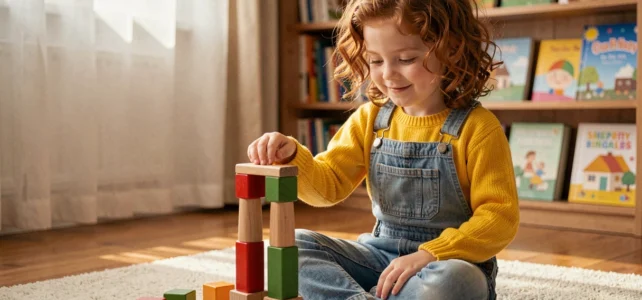
A child who neglects a new toy after three days, we all know the scene. The problem rarely comes from the toy itself, but from a mismatch between what is purchased and what the child actually needs at their stage of development. Choosing appropriate games and toys for children requires some concrete guidelines, not an encyclopedia of pedagogy.
Toy Safety: What the CE Mark Does Not Guarantee
The CE logo is often associated with rigorous certification. In reality, the CE marking is based on a self-declaration by the manufacturer for many categories of toys. The manufacturer relies on the harmonized EN 71 standards, but the involvement of an independent organization is only mandatory in certain cases, particularly when the standards do not cover all identified risks.
For parents, this means that a toy bearing the CE marking may be compliant on paper without having been tested by a third party. On online marketplaces, the risk increases. Since December 13, 2024, European regulation 2023/988 requires that an economic operator established in the Union be responsible for the product sold, enhancing traceability. In practice, there are still imported items without this guarantee.
A useful reflex: check for a European address on the packaging and consult product recall alerts before purchasing, especially for electric toys or those containing batteries. There is also a varied catalog on kidits.fr, which lists identified brands with their displayed standards.
Wooden Toys, Plastic Toys: A Choice That Goes Beyond Aesthetics

Wooden toys are making a strong comeback in households, driven by a natural and sustainable image. It’s not just a matter of trend. Cheap plastic toys sometimes contain endocrine disruptors (phthalates, bisphenol) that a baby’s mouth absorbs directly. The chemical requirements of the new European toy safety regulation strengthen the thresholds, but caution remains necessary for low-cost products outside the European Union.
Wood is not without risk. The paint or varnish covering it must also comply with EN 71 standards. A raw, untreated, and unpainted wooden toy remains the safest option for a child under three who puts everything in their mouth.
Concrete Criteria for Differentiation
- For a carrier or a bulky construction game, solid wood offers a sturdiness that thin plastic cannot match, and it can be easily passed from one child to another
- For water games, detailed figures, or electrical circuits, plastic remains more suitable, provided that chemical compliance is verified
- Mixed toys (wood and plastic elements) sometimes combine advantages, but each component must be individually compliant
Second-Hand Toys for Children: Checks Before Reuse
The second-hand market is booming, which is good for both the budget and the environment. But a second-hand toy cannot be checked like a piece of clothing. Checking for broken or detachable parts is the first step, especially for toys intended for children under three, where the risk of ingestion exists.
The condition of the paint deserves special attention. Chipped paint on an old wooden toy can release substances that no longer meet current standards. One should also check the readability of the compliance marking and, for electric or battery-operated toys, the integrity of the compartment and wires.
A final reflex often forgotten: consult online product recall databases with the reference or name of the toy. A model withdrawn from the market for safety defects can sometimes be found at a garage sale or on resale platforms without any notification.
Games and Activities by Age: Focus on the Concrete Rather Than Marketing Promises
Packaging claims “stimulates imagination,” “develops fine motor skills,” “promotes awakening.” These statements are non-binding and correspond to no certification. What matters is observing what the child actually does with the toy.
Under Three Years: Fewer Toys, More Manipulation
A baby or toddler needs to touch, stack, knock over, and transfer. Wooden carriers, simple nesting games, and blocks remain reliable choices. A child of this age benefits more from three well-chosen toys than from twenty items piled in a bin.
From Three to Six Years: Role Play and Construction
At this age, imitation games (kitchen, workbench, costumes) measurably develop language and social interactions. Slightly more complex construction games, with pieces that can be assembled in various ways, maintain interest over time. Feedback varies on this point, but an “open” toy (without imposed rules) seems to hold attention longer than a single-function toy.
After Six Years: Involve the Child in the Choice
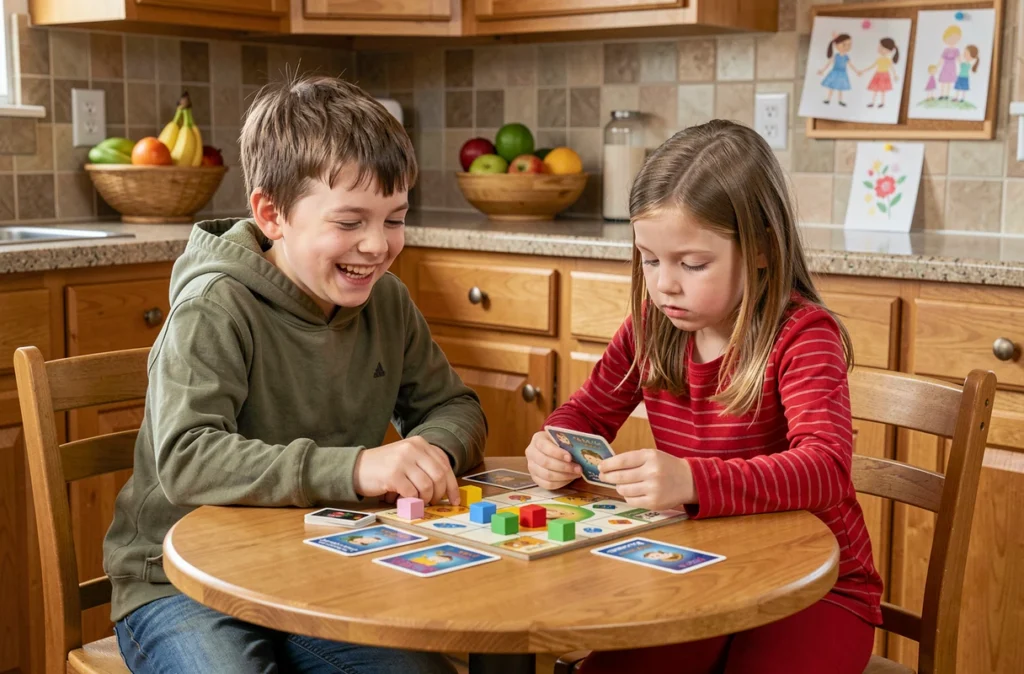
From the age of six, the child expresses clear preferences. It is beneficial to involve them in the choice while setting a framework. Instead of “choose what you want,” offering two or three pre-selected options among board games, creative kits, or outdoor activities avoids impulsive purchases driven by advertising.
Digital Passport for Toys: What Changes for Parents
The overhaul of European regulation introduces a digital product passport accessible electronically. This document will centralize compliance information, chemical composition, and toy traceability. For parents, it is a concrete tool that will allow them to check in seconds whether a toy meets current requirements.
This digital passport is not yet widespread across all products, but it marks a turning point in transparency. The advice for parents remains the same: prioritize toys whose origin can be traced, read mentions beyond just the CE marking, and adapt the toy to the child rather than the other way around.