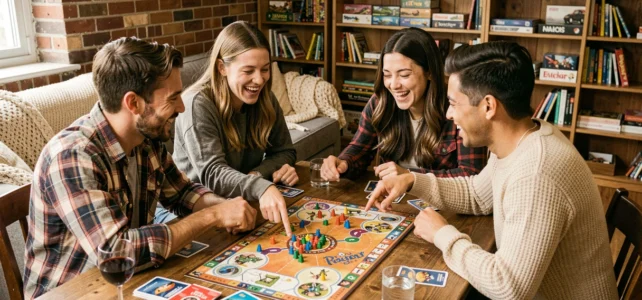
Four people around a table, a game still wrapped, and no one wants to read the rules. We’ve all experienced this scene. The problem is almost never the choice of board game, but how we structure the evening around it.
Short Cycle Board Game Evenings: The Formula That Revives Attention
Evenings that lose momentum share a common flaw: we bet everything on a single long game, and after an hour, half the table loses interest. The trend in the French gaming market confirms this observation. The bestsellers for the past two years are games with short playtimes, between fifteen and thirty minutes: Flip 7, Skyjo, Trio, Speed Bac, or Toy Battle.
We can draw inspiration from this to structure the evening in twenty-minute cycles with game rotation. The principle: three or four compact games placed on the table, and we switch boxes as soon as a game ends. Players who aren’t engaged with one title find momentum with the next. We catalog on lechaudrondesjeux.com the types of quick games that lend themselves well to this format.
To make it work, we prepare the rules in advance. We read each rulebook before the guests arrive, summarize each game in a maximum of three sentences, and start the game right away. The downtime between two games should not exceed two minutes.
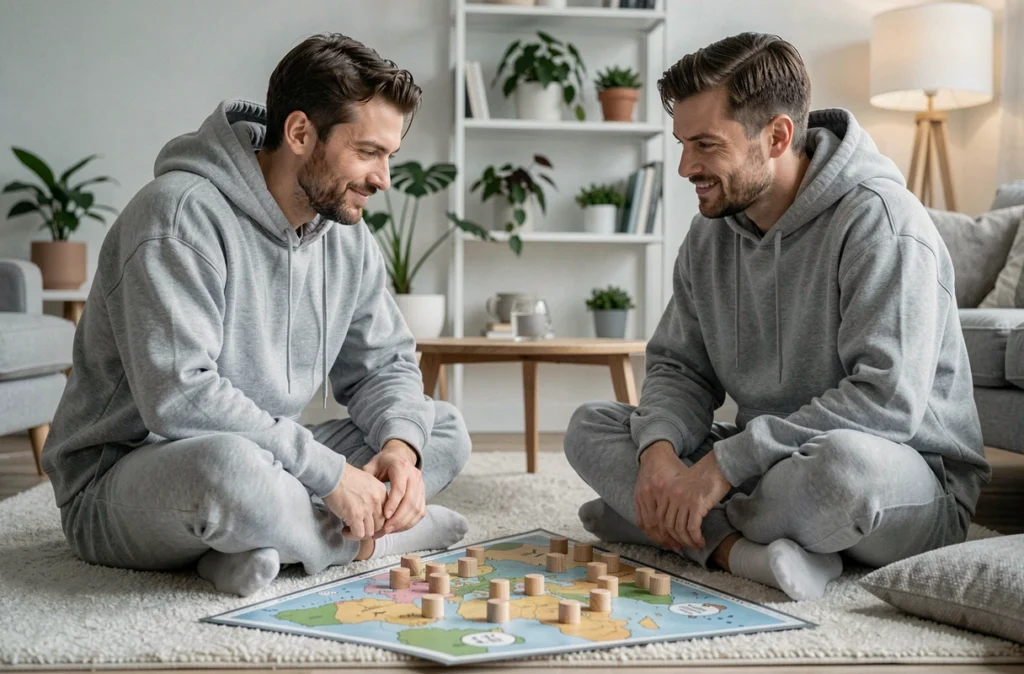
Home Escape Game: Transforming Your Living Room into an Investigation Ground
Investigation games and boxed escape games have seen strong growth in recent years. But buying a kit is not enough to create a memorable experience. What makes the difference is the decoration of the space and the staging around the game.
Specifically, we choose a room that can be closed off and rearranged. We move the furniture, tape clues to the backs of frames, hide a padlock on a shelf. Kits like Unlock offer ready-to-use scenarios with an app, but we can go further by printing fake newspapers and adding an ambient soundtrack from a phone placed in a corner.
Adapting the Difficulty to the Group
A common pitfall: choosing a scenario that is too difficult for a group of beginners. Feedback varies on this point, but a good rule is to select one level below what you think is appropriate. A team that solves puzzles smoothly has more fun than a team stuck on the first puzzle.
For families with children, cooperative scenarios work better than competitive formats. This avoids frustration and keeps everyone engaged until the resolution.
Atmosphere and Practical Organization of a Successful Game Night
The atmosphere of a board game night is influenced by the logistical details that are often overlooked. Here are the points that truly change the experience:
- The table must be clear. We eat before or after, not during a game with materials spread out. Glasses go on a side table or a small table next to it, never next to the game board.
- Lighting matters more than we think. Too bright a light is tiring, too dim a light makes it hard to read cards. An adjustable lamp in the center of the table solves the problem.
- The number of players dictates everything. Beyond six people, we split into two tables with different games. Forcing eight people onto a game designed for five kills the pace.
- We designate a timekeeper. Someone who monitors the clock, suggests changing games when a game drags on, and revives the group if energy dips.
The Trap of a Permanent Buffet
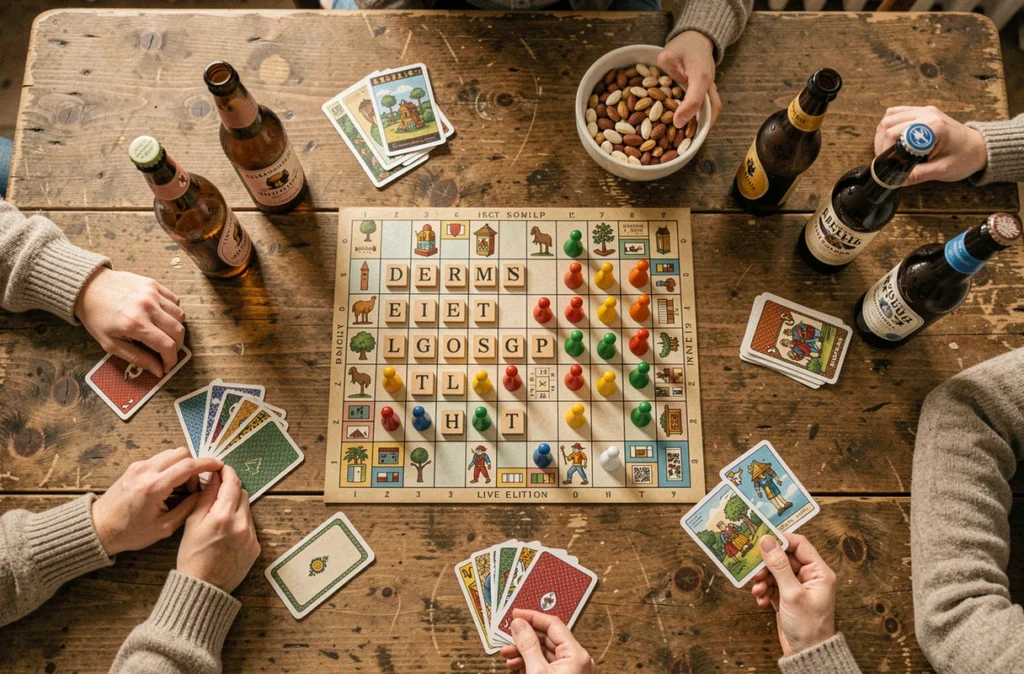
Many articles recommend having snacks throughout the evening. In practice, food on the game table causes damage to the materials. Greasy chips on cards, sauce on a game board: we’ve all seen the result. Instead, we plan a clear break between two sessions, with a real refueling moment separate from the game space.
Themed Board Game Night: Creating a Common Thread for the Group
An evening where we play games with no connection can lack coherence. The alternative: choose a theme and select games accordingly.
A medieval theme with Carcassonne, a castle escape game, and a game of Citadels creates a natural narrative progression. A detective theme works with investigation games, a revamped Cluedo, and a dark jazz playlist in the background.
- The theme also guides the decoration, even minimal: a few candles, a colored tablecloth, a visible accessory on the table are enough.
- We can assign roles to players upon their arrival (detective, suspect, chronicler) to set the mood even before the first game.
- A small final ranking with a symbolic prize (the worst card in the game wrapped in gift paper, for example) gives a reason to come back next time.
This thematic format works particularly well for team evenings among colleagues or family activities during a long weekend. The common thread transforms a series of games into a true collective experience.
The best game night we’ve ever experienced didn’t have the best game in the world on the table. It had a well-calibrated group, rules explained in advance, a clean table, and a maintained pace. The rest is just a bonus.