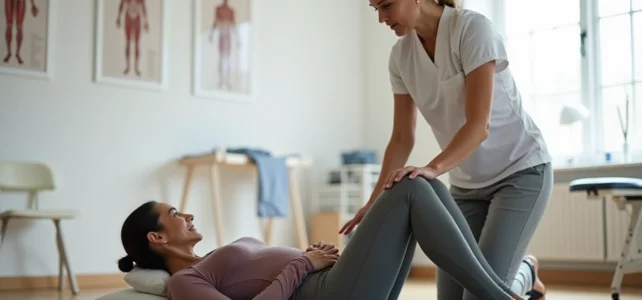
After a sacral fracture, the first concrete difficulty is not the pain itself, but the inability to sit normally. Standing is tiring, lying on the back puts direct pressure on the fractured area, and the classic sitting position becomes a torment. Rehabilitation of the sacrum after a fracture begins with this reality: finding tolerable postures even before discussing muscle strengthening or resuming walking.
Stable or unstable sacral fracture: rehabilitation does not follow the same timeline
Rehabilitation for a fracture due to bone fragility (common in elderly people after a simple fall) is not the same as for a high-energy fracture resulting from a road accident. Most online content discusses “sacral fracture” without this distinction, even though it conditions the entire protocol.
Stable fractures, particularly those of the associated pubic branches, most often heal without surgery. Verticalization can begin quite early, under pain control. For unstable fractures or osteoporotic “H” fractures, weight-bearing is delayed and monitored by imaging.
This stratification also changes the overall recovery duration. A stable fracture often allows for assisted walking to resume within a few weeks, while an unstable fracture may require several months before full weight-bearing. To find essential advice for sacral rehabilitation tailored to each situation, it is first necessary to accurately identify the type of fracture through imaging.
Percutaneous sacroplasty: when rehabilitation starts earlier than expected
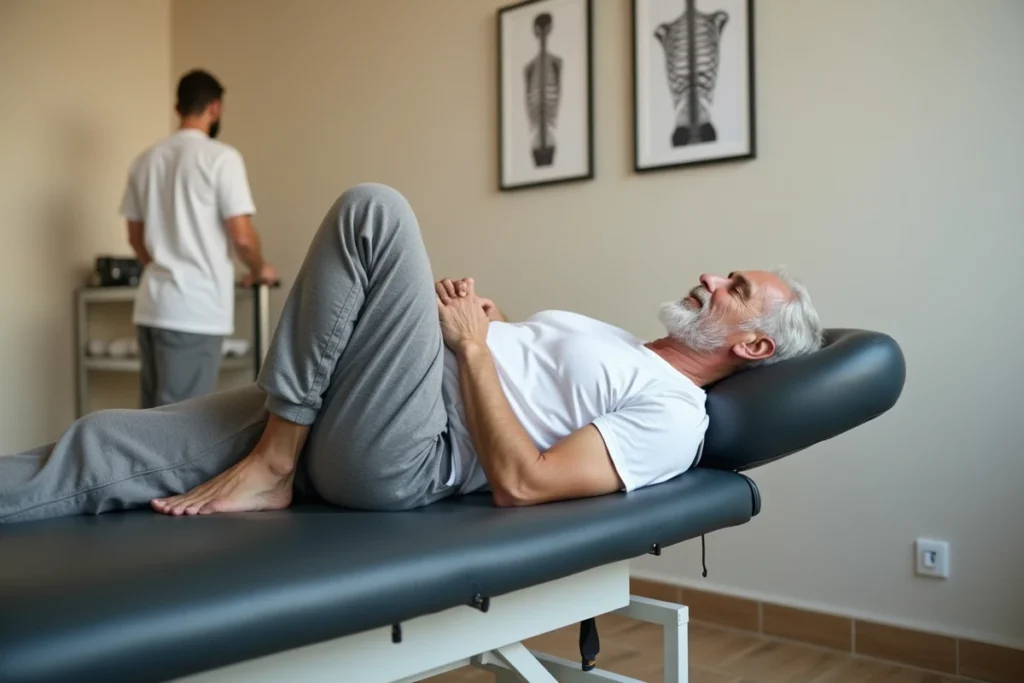
In elderly patients suffering from intense pain after a sacral fracture, imaging-guided percutaneous sacroplasty changes the game. This technique involves injecting bone cement directly into the fractured area to stabilize the site and quickly reduce pain.
The direct benefit for rehabilitation is simple: when pain decreases quickly, the patient can be verticalized much earlier. Weight-bearing and assisted walking become possible in the days following the procedure, whereas conservative treatment sometimes requires several weeks of relative bed rest.
This time-saving in verticalization is not trivial. The longer bed rest continues, the greater the risks of muscle wasting, thromboembolic complications, and loss of autonomy. Sacroplasty does not replace rehabilitation, but it changes the starting point.
Strengthening the pelvis after fracture: stabilizing muscles and pelvic floor
A common mistake in post-sacral fracture rehabilitation is focusing solely on resuming walking while neglecting the deep muscles. Recent protocols emphasize the early work of pelvic stabilizers and the pelvic floor.
Which muscles to target first after a sacral fracture
Here we are talking about three muscle groups that play a direct role in the stability of the sacroiliac joint and the pelvis:
- The transverse abdominal muscle, which acts as a natural belt around the trunk and limits stress on the sacrum during daily movements
- The gluteus medius, a lateral stabilizer of the pelvis during walking, whose weakness causes painful compensations in the spine
- The pelvic floor muscles, often overlooked, which help support the pelvic ring and whose relaxation worsens pain in the sacrococcygeal region
These strengthening exercises begin in a lying position and then progress to sitting and standing postures as healing advances. The progression is based on pain tolerance, not a fixed timeline. Feedback on this point varies among patients and fracture types.
Mobility of the sacroiliac joint
The sacral fracture often leads to stiffness in the sacroiliac joint. Rehabilitation includes gentle mobilization exercises for the pelvis (rotations, lateral inclinations) to gradually restore the range of motion without stressing the fracture site.
Prevention of recurrence: osteoporosis and the risk of new pelvic fractures
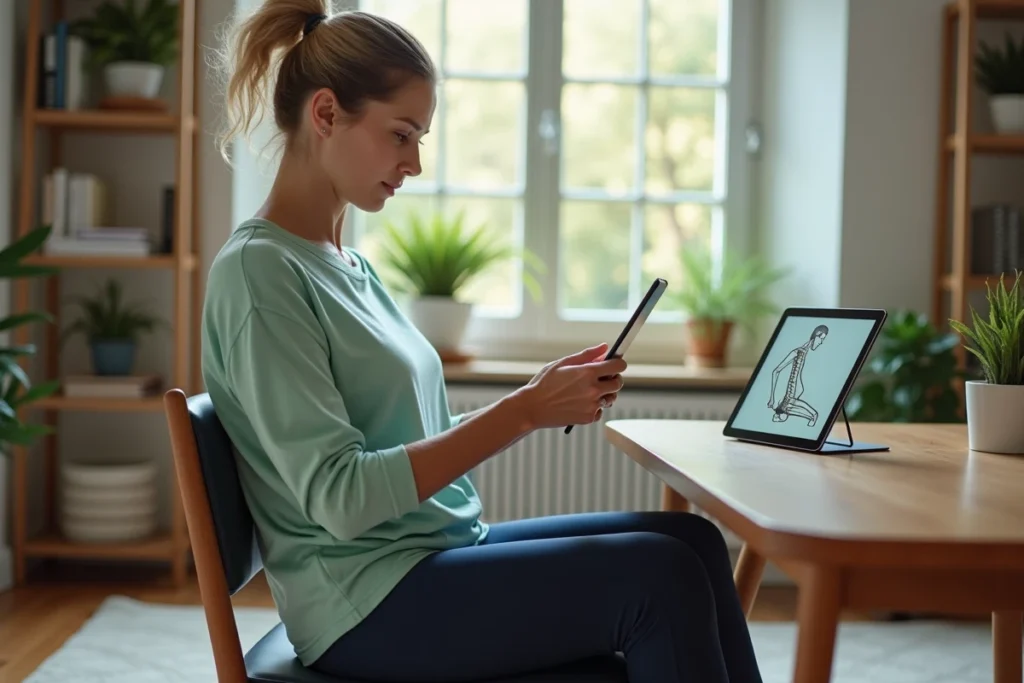
An often-overlooked aspect after a sacral fracture, especially in patients over 65: the risk of new pelvic or vertebral fractures remains high if the underlying cause is not addressed. Bone healing alone is not enough.
Current recommendations integrate a structured secondary prevention program into the rehabilitation plan:
- A densitometric assessment to evaluate bone density and guide any potential anti-osteoporotic treatment
- Vitamin D supplementation if levels are insufficient, which is common in elderly individuals with little sun exposure
- A fall prevention program focused on balance, proprioception, and home modifications (rugs, lighting, grab bars)
- A targeted nutritional follow-up focusing on calcium and protein intake, which directly contributes to bone recovery
Incorporating this dimension from the beginning of rehabilitation changes the long-term trajectory. Without osteoporosis prevention, rehabilitation addresses the fracture but not the underlying condition.
Posture and pain management in daily life during recovery
Pain from the sacrum is especially noticeable during prolonged sitting and during transitions (getting up, lying down, turning in bed). Waiting for the fracture to heal without adjusting posture slows recovery.
A coccyx cushion (in the shape of a U or donut) reduces direct pressure on the sacrum while sitting. Firm surfaces are also preferred over soft sofas, which force the pelvis into excessive flexion.
For sleeping, lying on the side with a pillow between the knees maintains pelvic alignment and reduces stress on the sacroiliac joint. These simple postural adjustments decrease pain and facilitate the progression of rehabilitation exercises.
Resuming walking is done with a walker or crutches depending on the stability of the fracture. The goal is not the distance covered but the quality of the walking pattern: symmetrical weight-bearing, stable pelvis, no compensatory limping that would overload the spine.
Rehabilitation of the sacrum after a fracture is not a linear process. Some weeks progress quickly, while others stagnate without apparent reason. The most reliable follow-up criterion remains the ability to perform daily tasks (sitting, standing, walking) with gradually decreasing pain, not the number of weeks since the fracture.