Eliminating weeds before sowing grass or a vegetable garden is not just about pulling out what sticks out. The real question is which method sustainably reduces the seed bank present in the soil, and at what time cost. Several techniques exist, from false sowing to temporary mulching, but their effectiveness varies depending on the type of weeds and the timing of intervention.
Seed bank in the soil: the factor that visible weeding does not address
Pulling weeds from the surface provides an immediate result. The problem lies deeper: the soil contains a reserve of dormant seeds, sometimes several centimeters deep. Each pass of a tool that disturbs the soil brings some of these seeds to the surface, where they find the light necessary for germination.
Recent recommendations emphasize a specific point: identify areas with a high seed bank before choosing a method. Soil that has hosted abundant seed weeds (chickweed, starwort, lamb’s quarters) is not treated the same as soil infested with rhizomatous perennials (couch grass, bindweed). In the first case, false sowing is formidable. In the second, roots must be extracted first.
To prepare the soil before sowing sustainably, combining mechanical prevention, targeted action, and ground cover yields better results than a single technique applied blindly.
False sowing, manual weeding, and tarping: method comparison before sowing
The three most common techniques for eliminating weeds before sowing deserve to be compared on concrete criteria.
| Method | Principle | Time before sowing | Effectiveness on annuals | Effectiveness on rhizomatous perennials |
|---|---|---|---|---|
| False sowing | Prepare the soil, wait for the weeds to emerge, then destroy them | 3 to 4 weeks per cycle (repeatable) | Very high | Low |
| Manual weeding | Pulling out plants and their roots | Immediate after intervention | Medium (seeds remain) | High if soil is moist |
| Tarping (opaque tarp) | Deprive weeds of light to exhaust reserves | Several weeks to a few months | High | Medium to high depending on duration |
False sowing stands out clearly for soils loaded with annual weed seeds. Its principle is simple: prepare the soil as if you were going to sow, water if necessary, then wait for the weeds to emerge.
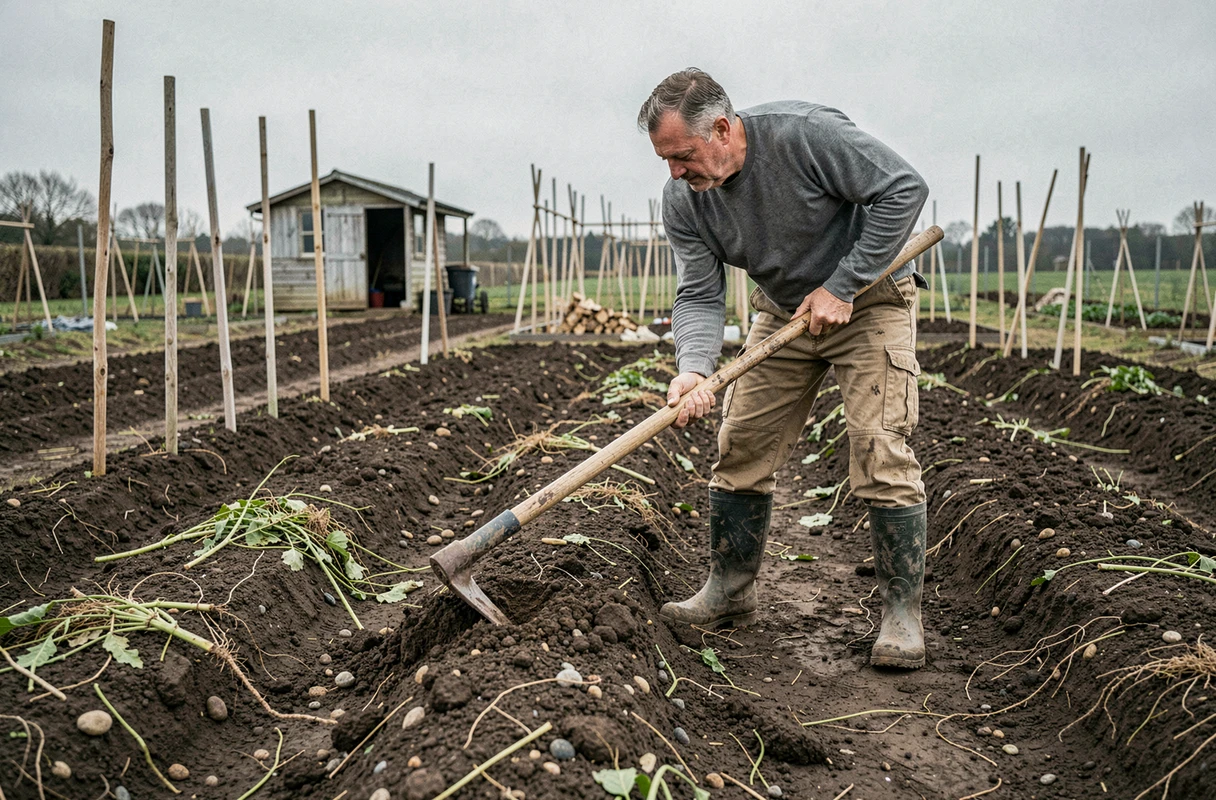
When they reach the seedling stage, a superficial pass with a rake or hoe is enough to destroy them. Each cycle of false sowing exhausts a layer of the seed bank without bringing up new ones, provided the soil is not worked deeply again.
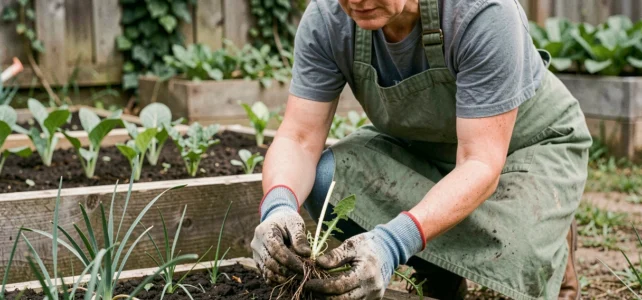
On the other hand, manual weeding has a clear advantage against stubborn perennials. Pulled after rain or watering, couch grass comes out more easily with its root network. Working on moist soil improves the extraction of roots in one piece, which greatly limits regrowth.
Timing errors that ruin soil preparation
Many gardeners prepare their soil and sow at the same time. This haste leaves the field open to weeds, whose seeds often germinate faster than those of grass or vegetables.
False sowing requires patience. A single cycle takes three to four weeks. Two successive cycles are sometimes necessary for heavily infested ground. Planning this step means starting soil preparation well before the intended sowing date.
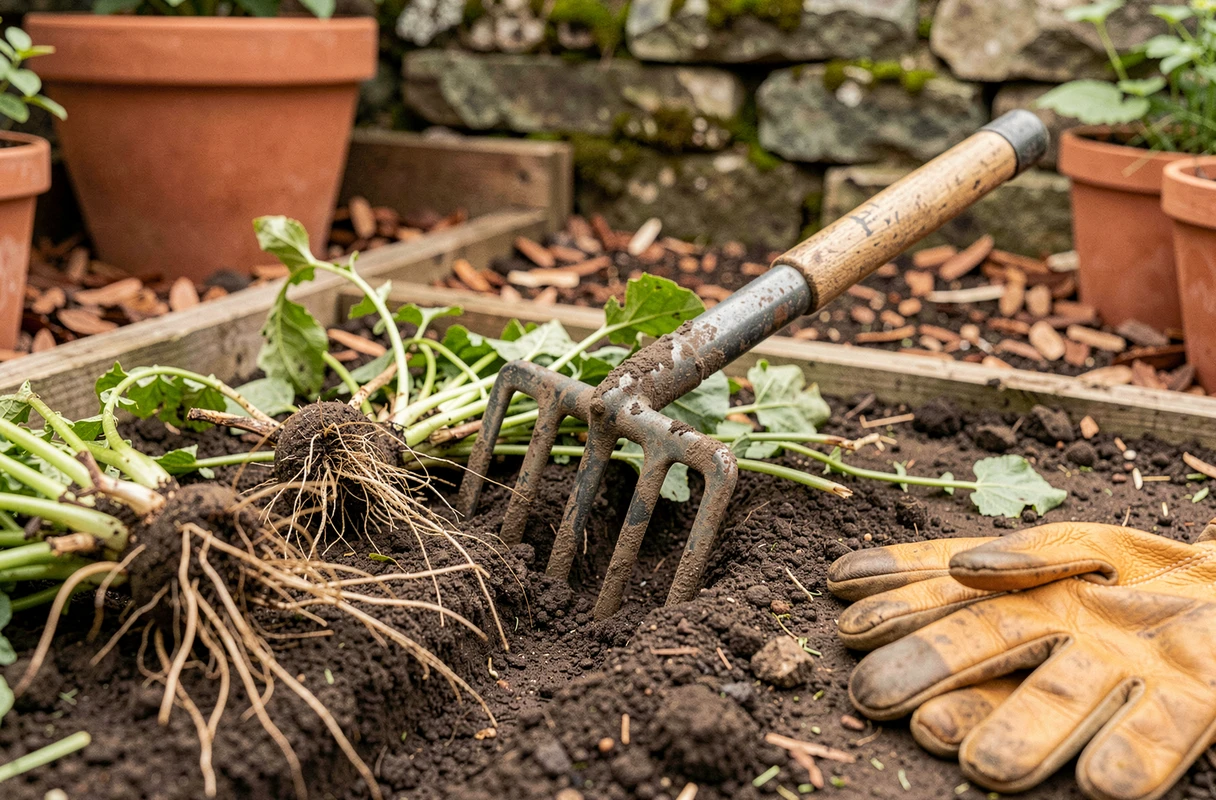
The other common mistake concerns the depth of soil work. Turning the soil with a spade or tiller after a false sowing negates some of the benefits: deep work brings dormant seeds back to the surface. After the last cycle of false sowing, a simple superficial scratching is enough to prepare for sowing.
Sowing window and climate
False sowing works best when conditions are right for weed germination: warmed soil and regular moisture. In practice, this corresponds to early spring or late summer, which are also the best times to sow grass. The coincidence is not accidental: weed seeds germinate under the same conditions as grass seeds.
Covering bare soil between preparation and sowing: the often-forgotten reflex
Prepared soil left bare for several days invites weeds. The light hitting the surface triggers the germination of new seeds. This phenomenon is particularly pronounced in loamy soils and vegetable garden soils rich in organic matter.
Quickly covering the soil after extracting weeds limits new germination. Temporary mulching (straw, dry mowing, burlap) blocks access to light while maintaining soil moisture. This cover is removed just before sowing, when the soil is ready and the surface seed bank is already reduced.
- Dry straw or hay: easy to remove, decomposes slowly, suitable for vegetable garden soils and future lawns if the layer remains thin.
- Opaque tarp (black plastic or woven fabric): more radical, it even smothers perennials if left in place for several weeks, but prevents biological activity in the soil over time.
- Dry grass clippings: free and available in season, they form an effective mulch a few centimeters thick, provided they are dry to avoid fermentation.
White vinegar as a herbicide: a false good idea regulated
White vinegar appears in many lists of natural herbicides. Its contact effect burns the aerial part of plants, providing a quick visual result. The roots and seeds remain intact: regrowth occurs within a few weeks.
Regulatory-wise, the situation has changed. Since 2019 in France, the use of white vinegar as a herbicide is classified as a pesticide without authorization. This classification alters the usual recommendation of “homemade recipes.” White vinegar is not approved for phytosanitary use, and its repeated application acidifies the soil, which can harm the germination of grass seeds.
To eliminate weeds before sowing, mechanical methods (false sowing, manual weeding, tarping) remain the most reliable and compliant with regulations. Well-prepared soil in advance, with one or two cycles of false sowing followed by superficial scratching, offers grass or vegetable gardens the best starting conditions, without chemicals or risky recipes.