Comparing eco-friendly interior decoration materials involves measuring three parameters that are rarely considered side by side: the environmental footprint of the material, its durability over time, and its aesthetic potential. This article intersects these criteria to identify options that live up to their promises in eco-friendly decoration and those that are more about marketing.
Biosourced materials for interior decor: comparative table
Several emerging or established materials are competing in the sustainable decoration market. Certified wood remains the benchmark, but alternatives like mycelium, cork, or recycled ocean plastics have been gaining ground since 2025.
| Material | Origin | Estimated Durability | Main Decorative Use | Biodegradable |
|---|---|---|---|---|
| Certified wood (FSC/PEFC) | Sustainably managed forests | Very high | Furniture, coverings | Yes |
| Mycelium leather | Fungal root systems | Medium (limited history) | Chairs, poufs, statement pieces | Yes (100%) |
| Cork | Cork oak bark | High | Wall coverings, objects | Yes |
| Recycled ocean plastics | Recovered marine waste | High | Rugs, technical fabrics | No |
| Bio-ceramics | Transformed organic waste | High | Dinnerware, decorative objects | Variable |
| Raw linen / wool | European agriculture | High | Textiles, cushions, curtains | Yes |
Mycelium leather, a biodegradable material derived from fungal cultivation, is the newest entry in this table. Its history is still limited, making any promise of longevity difficult to verify. In contrast, cork and certified wood benefit from decades of documented use.
Rugs made from recycled ocean plastics combine marine pollution cleanup with interior design. Their mechanical strength is comparable to that of conventional synthetic textiles, with a significantly more favorable environmental balance.
Those looking to deepen their material and style choices will find additional insights in the decor on the Maisons Alternatives website, which lists various approaches to sustainable living.
Biophilic decoration: why it goes beyond simple nature style
Biophilic decoration has been identified since 2025 as a structuring trend in interior design. It is not limited to placing three green plants on a shelf.
Its principle is based on strengthening the connection between humans and living things within built spaces. Three levers enable its implementation:
- Biomorphic shapes in furniture and objects: organic curves, asymmetries inspired by natural structures, absence of strictly geometric lines
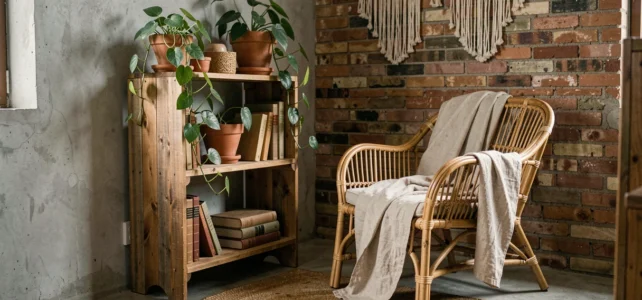
- Raw organic materials (natural stone, rattan, solid wood, wool) left exposed, without lacquered finishes or heavy chemical treatments
- Lighting atmospheres modeled on natural cycles: indirect light, warm tones, variations in intensity according to different areas of the room
The value of this approach for an eco-friendly interior lies in its holistic logic. While “nature style” settles for an aesthetic veneer, biophilic decoration integrates well-being and stress reduction as measurable objectives of the decorative project.
A biophilic living room does not look like another. Personalization is at the heart of the approach, distinguishing it from standardized decor trends that can be found identically from one interior to another.
Second-hand furniture and upcycling: the real gap between idea and practice
Buying second-hand furniture and practicing upcycling are featured in all eco-decorating guides. The reality deserves nuance.
A piece of furniture found at a flea market or on a resale platform has an almost zero carbon footprint compared to a new piece transported from the other side of the world. This is the main advantage, and it is solid. However, not all vintage furniture is eco-friendly by default: some contain formaldehyde-based glues, toxic varnishes, or non-recyclable synthetic foams.
Three verification points before buying second-hand furniture for a healthy interior:
- The smell: a persistent chemical odor indicates active volatile organic compounds
- The type of finish: a cracked varnish on furniture made before the 1980s may contain lead
- The structure: solid wood furniture without particleboard or glued plywood poses fewer health issues than particleboard furniture
Upcycling, which involves transforming an existing object to give it a new decorative function, produces unique pieces. Its main asset is not only environmental: an upcycled object is not found in any other interior, directly addressing the quest for originality.
Biosourced paints and coatings: the impact of wall choice on air quality
Walls represent the largest surface area in an interior. Therefore, the choice of wall covering has a proportional impact on indoor air quality and the overall ecological footprint of the decoration.
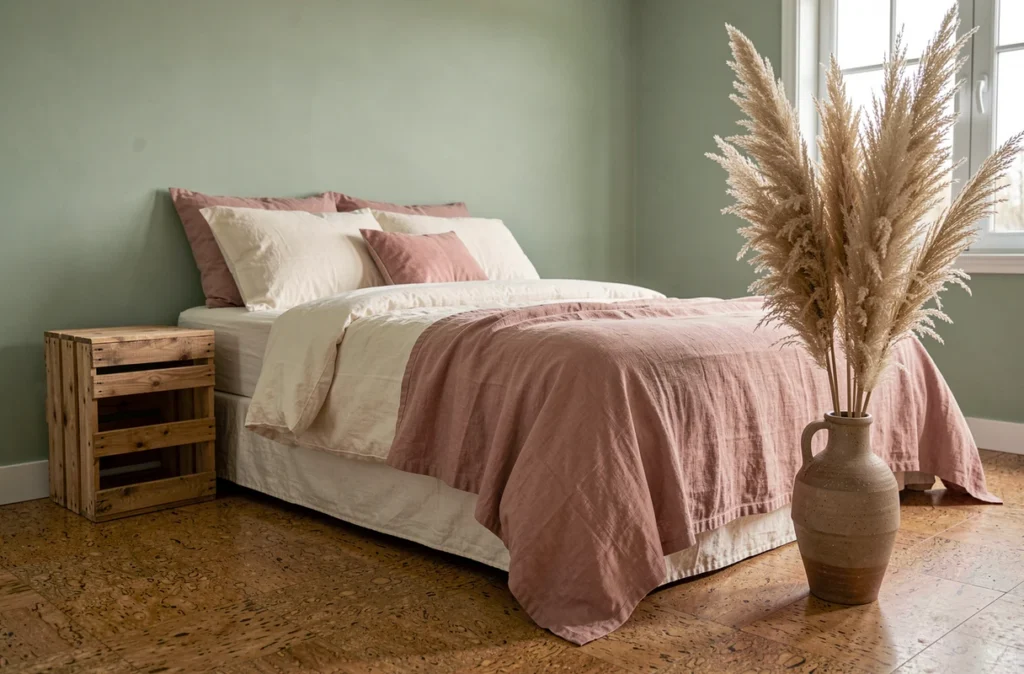
Biosourced paints, formulated from plant or mineral-based components, stand out from conventional paints due to their low volatile organic compound content. Their color palette has significantly expanded in recent years, rendering the argument that “eco-friendly” equates to “beige” obsolete.
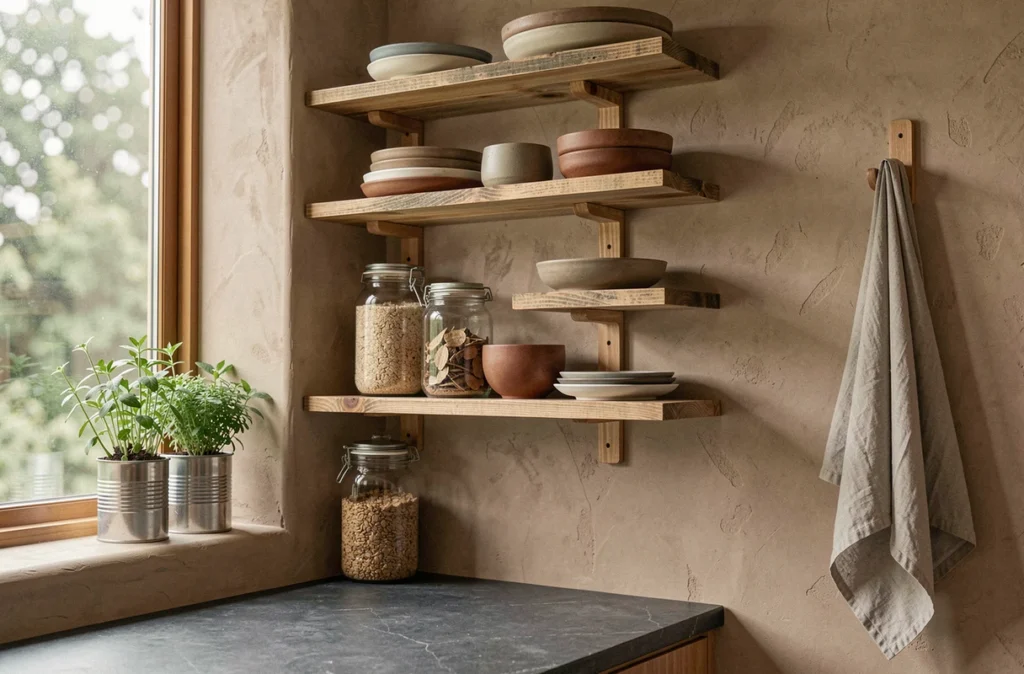
In contrast, lime or clay plasters offer textures that cannot be replicated with conventional paint. Their application requires artisanal know-how, which increases installation costs, but these natural plasters regulate indoor humidity in addition to their decorative role. The wall then becomes an active element of the room’s comfort, not just a colored surface.
The combination of a natural plaster on an accent wall and biosourced paint on the remaining walls constitutes a compromise that preserves the budget without sacrificing the environmental coherence of the project.
The choice of eco-friendly decoration materials relies less on a list of “green” products than on the ability to verify their origin, composition, and lifespan. A sustainable interior is built material by material, accepting that each option has its own technical and aesthetic limitations.