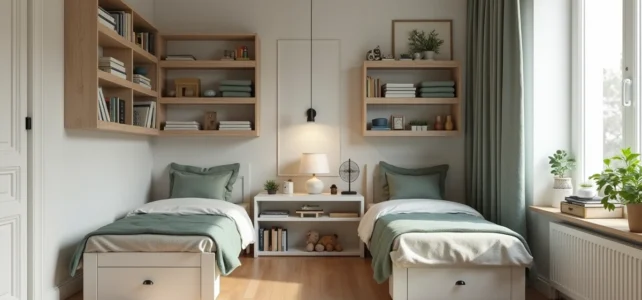
Arranging a small room for two boys is like solving an equation with multiple unknowns: two beds, two work areas, storage, and enough free space to keep the room breathable. Classic solutions (bunk beds, compact furniture) are known, but their implementation in a small area raises questions of safety, sleep comfort, and daily cohabitation. Here are ten concrete ideas, each with its strengths and real limitations.
1. Loft bed with integrated desk underneath
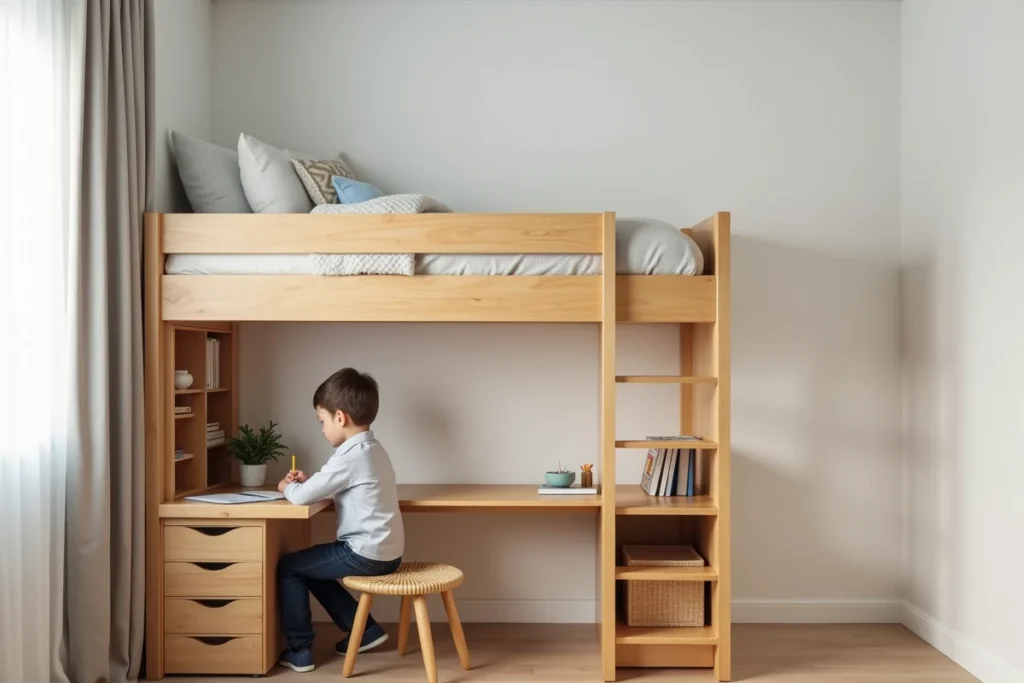
Placing a bed up high frees up the entire floor space for a desk or reading nook. In a shared room, two loft beds facing each other can work if the ceiling height exceeds two meters forty.
The issue of safety is often underestimated in most decor guides. Loft beds are not suitable for children under six years old, and the sturdiness of the safety barrier varies greatly from one manufacturer to another. Check compliance with current standards before purchasing.
If you’re looking for more room layout ideas for 2 boys, the combination of elevated sleeping and working areas remains one of the most space-efficient configurations.
2. Staggered L-shaped bunk beds to free up a corner
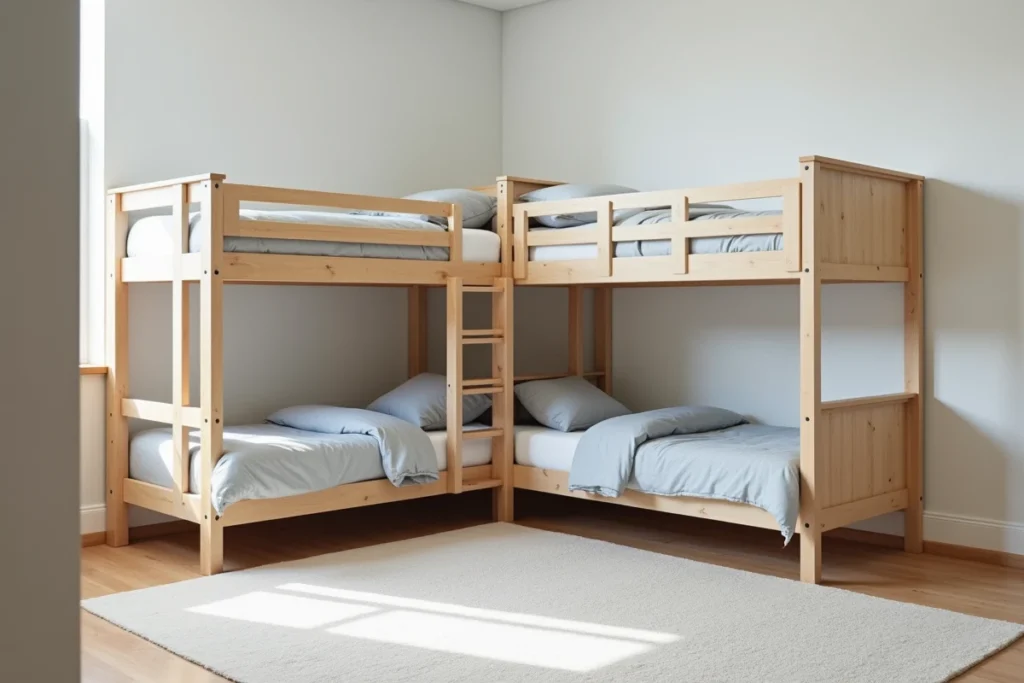
Unlike the classic column arrangement, the L-shaped layout positions the bottom bed perpendicular to the top one. The corner freed up under the upper bed can accommodate a dresser, a toy chest, or a small chair.
This configuration works particularly well in almost square rooms. It breaks the corridor effect created by two beds aligned against the same wall and gives each child a different sleeping orientation, enhancing the feeling of personal space.
3. Trundle bed to keep the floor free during the day
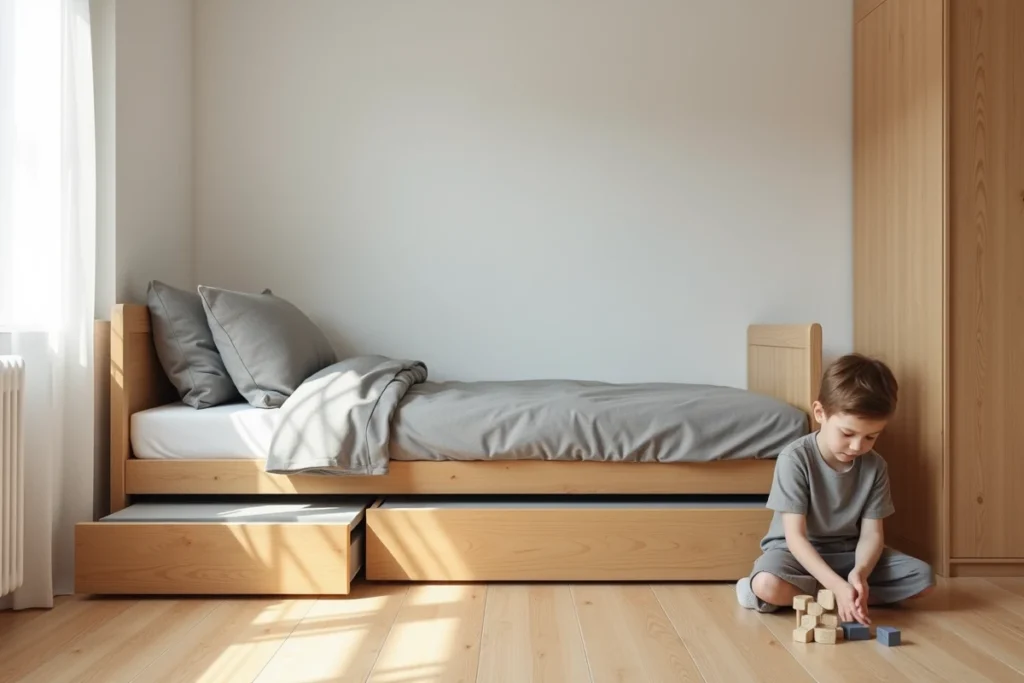
The trundle bed slides under the main bed during the day and pulls out in the evening. It’s the most effective solution to recover several square meters of floor space during the day, transforming the room into a play area.
The main limitation is the comfort of the lower bed: the mattress in the drawer is often thinner. Opt for a model where the lower bed’s frame lifts on legs once unfolded, to prevent the child from sleeping almost on the floor.
4. Open shelves as a light separation between the two areas
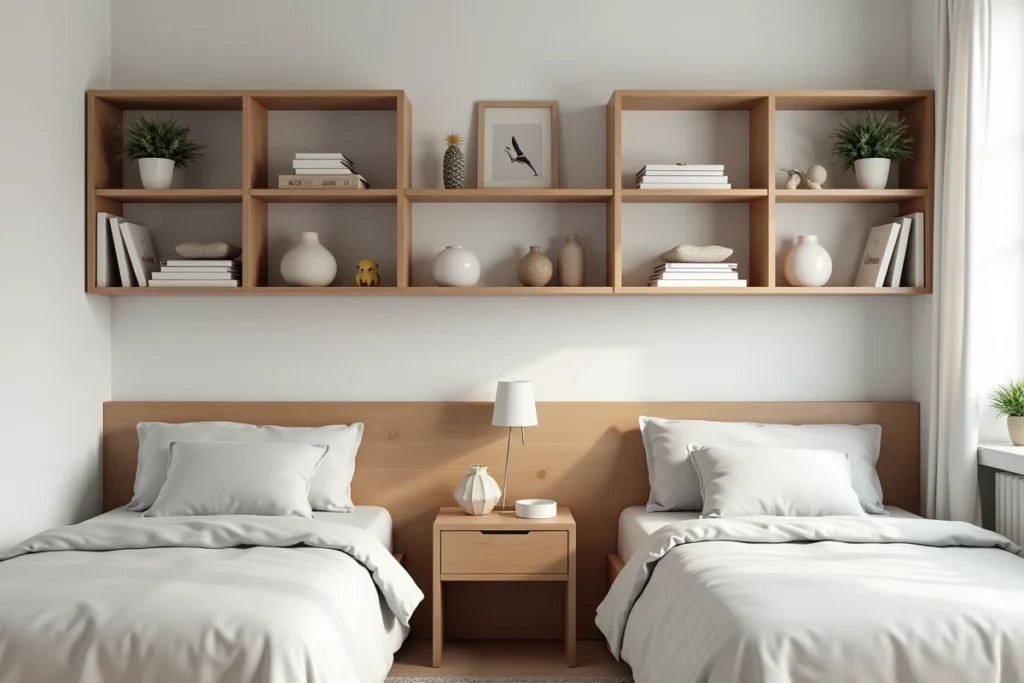
Recent content on small spaces confirms a trend: light separations (open shelves, screens, curtains) are gaining ground over solid partitions. In a small room, defining without darkening is the real challenge.
An open bookshelf placed perpendicular to the wall creates two distinct territories while allowing natural light to pass through. Each boy stores his belongings on his side. The shelf thus fulfills three functions: storage, separation, and decoration.
5. Calm and gender-neutral color palette to visually enlarge the room
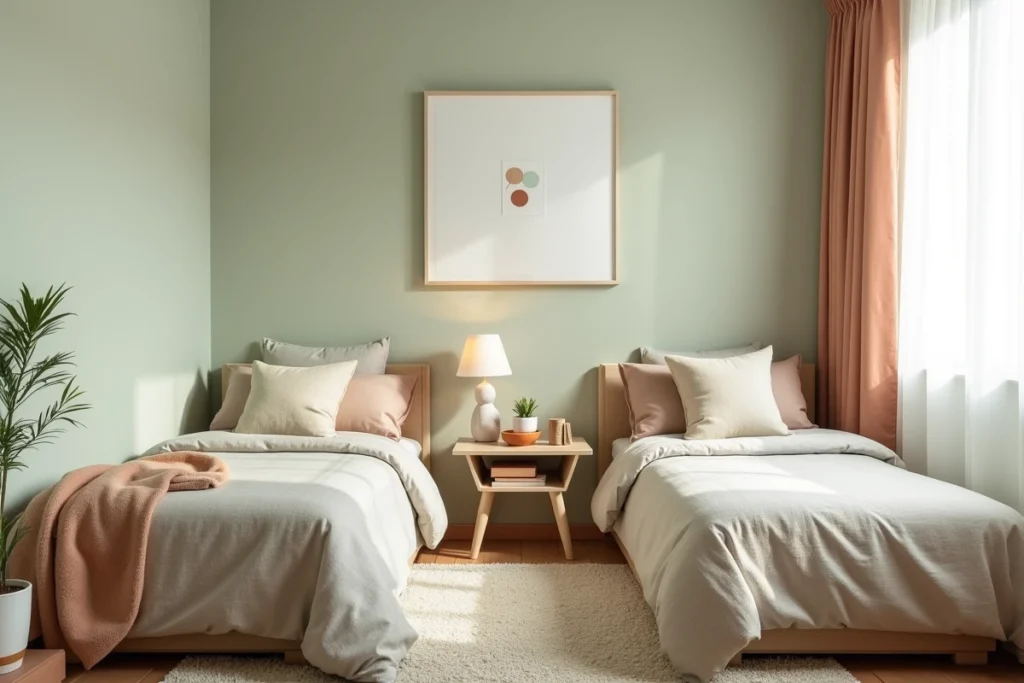
The 2026 trend in children’s room decoration is moving away from highly gendered themes. Color palettes are leaning towards natural, earthy, or pastel tones that visually enlarge the space and create a conducive atmosphere for sleep.
In practice, painting just one wall in a more intense shade (sage green, blue-gray) is enough to give character without shrinking the room. The rest of the walls remain light. This simple principle avoids the visual overload often found in shared rooms.
6. Floor-to-ceiling wall storage to utilize vertical space
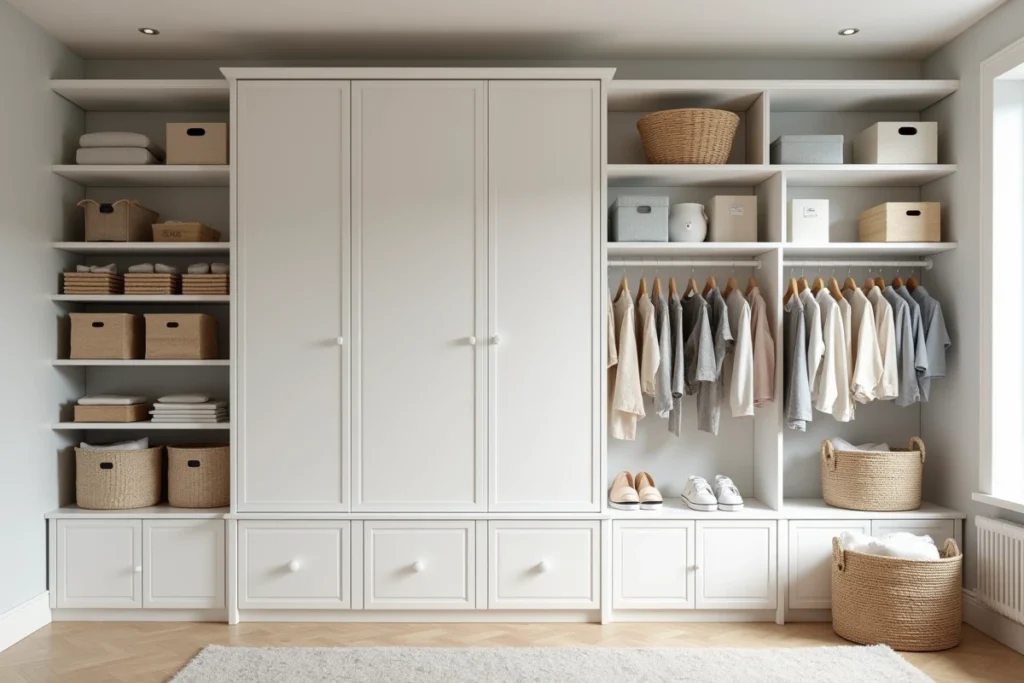
When floor space is limited, every vertical centimeter becomes potential storage. Storage cubes fixed in columns, narrow shelves above doors, hooks behind doors: the goal is to avoid placing anything on the floor that could be stored up high.
Three categories of vertical storage to combine:
- High shelves for rarely used items (board games, seasonal books)
- Accessible bins at child height for everyday items (clothes, supplies)
- Coat hooks and pegs behind the door for bags and pajamas
7. Positioning beds away from windows and light sources
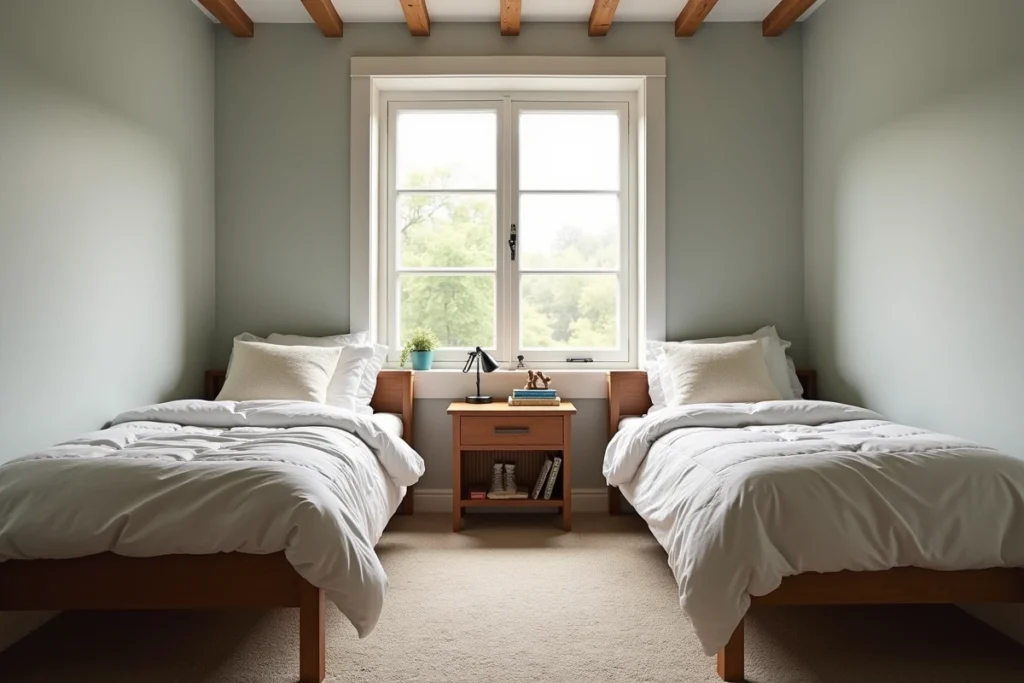
The angle of well-being and circulation remains underexplored in classic decor guides. Feng Shui-inspired recommendations for children’s rooms advise against placing a bed directly under a window, facing a mirror, or in close proximity to electrical devices.
Beyond any esoteric considerations, these principles have a practical foundation: a bed under a window exposes to drafts and morning light, which disrupts children’s sleep. Keeping beds away from direct light sources significantly improves the quality of their nights.
8. Foldable wall desk for two workstations without clutter
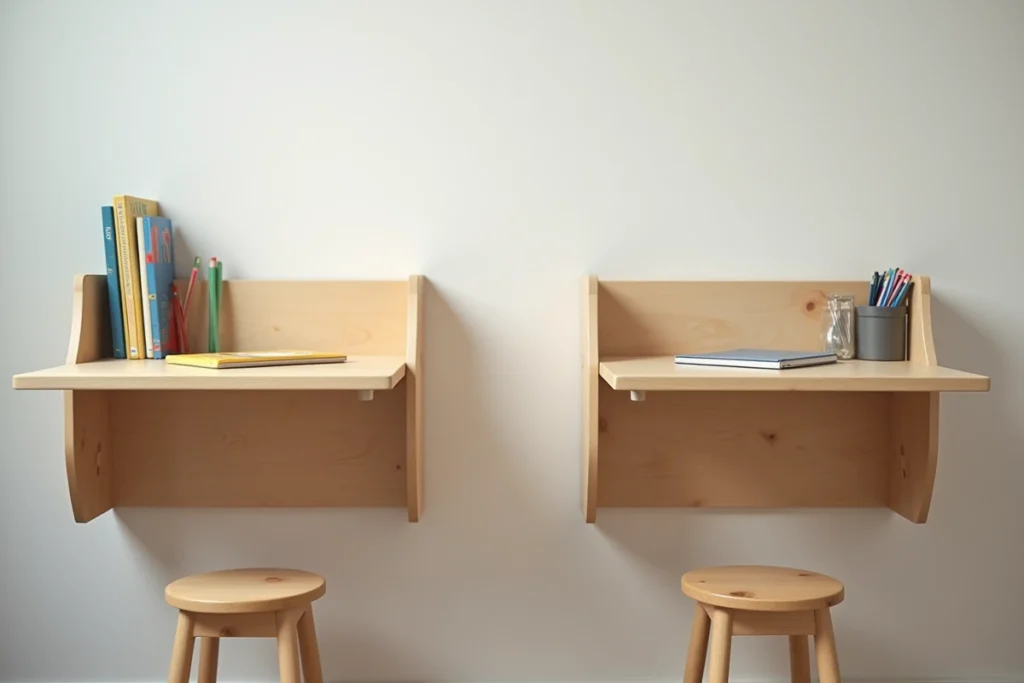
A fixed desk for two children takes up a considerable amount of space. The alternative: two foldable tabletops fixed to the wall, which each boy unfolds when needed.
The tabletop folds flat against the wall after homework, freeing up the passage. This solution requires solid mounting (appropriate anchors for the type of wall) and a tabletop of at least sixty centimeters deep to be truly functional.
9. Blackout curtain between the beds to create nighttime privacy
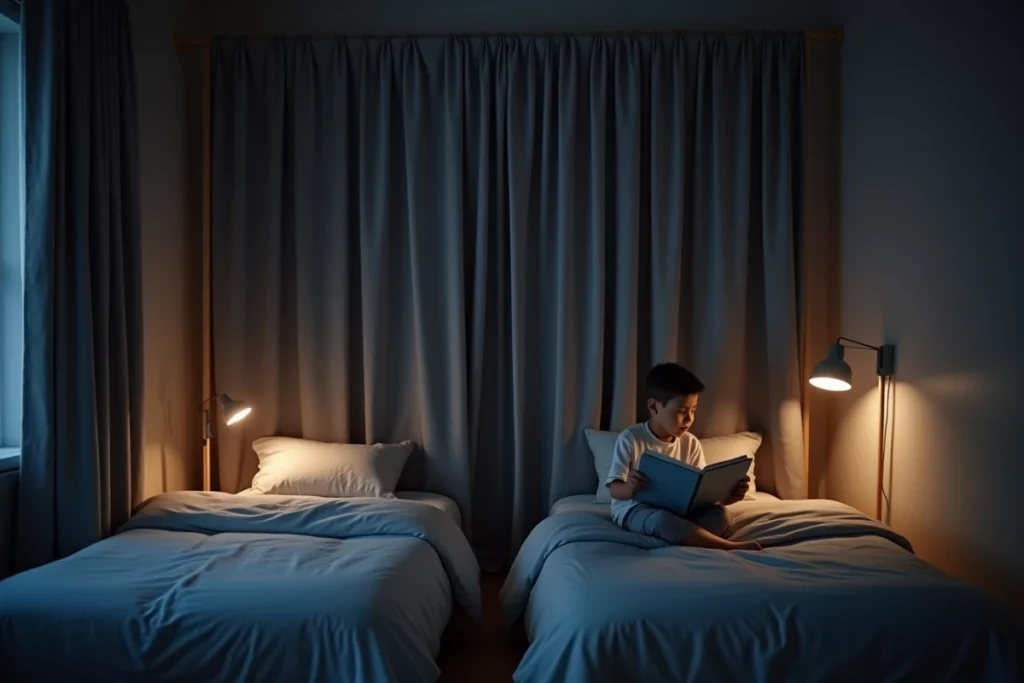
In a shared room, one of the boys often reads later than the other. A thick curtain hung on a rod fixed to the ceiling between the two sleeping areas solves this problem without heavy renovations.
The curtain also provides a sense of privacy that children crave as they grow. It can be drawn back in the morning to regain brightness and space, and closed in the evening to mark the boundary between the two territories.
10. Bed box with integrated storage to eliminate low furniture
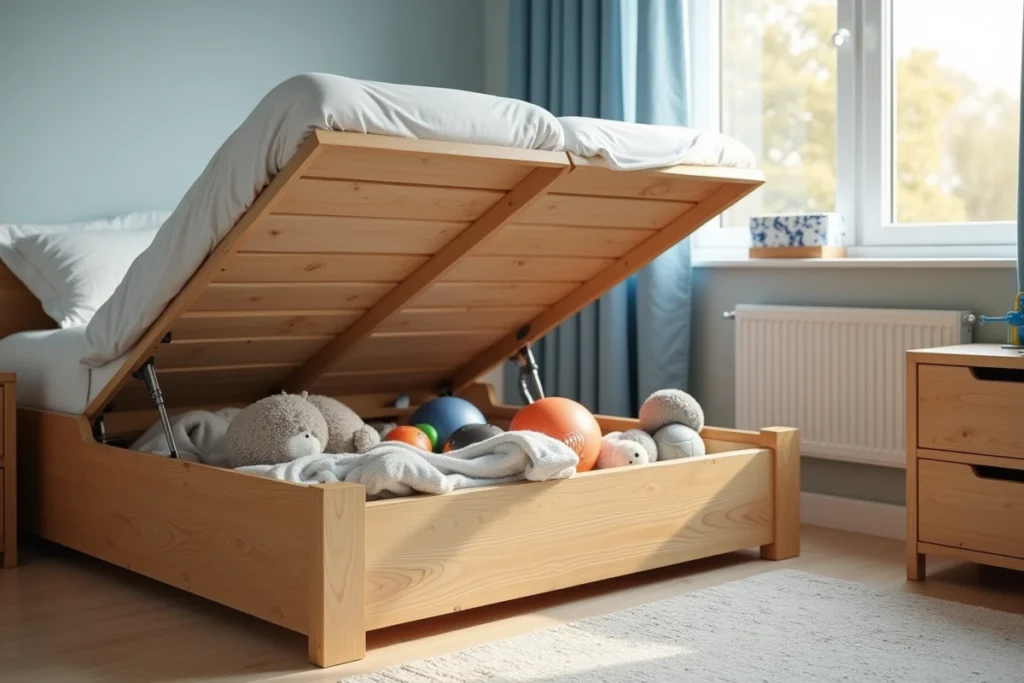
Each bed equipped with a box under the mattress absorbs duvets, out-of-season clothes, and bulky toys. In a small room, removing a dresser thanks to under-bed storage can free up enough space for a small play rug.
Opt for models with side opening rather than lifting the mattress, which are easier for a child to handle alone. Ensure that the mechanism includes a sufficiently strong piston to support the weight of the mattress without effort.
Arranging a small shared room relies less on a miracle piece of furniture and more on combining several of these tips. A trundle bed combined with wall storage and a separation curtain can transform a few square meters into a space where each boy finds his place, both day and night.